 |
Salford |
31 May 24 A walk from the Trafford Centre along the Bridgewater Canal to Worsley Delph. Sunny.
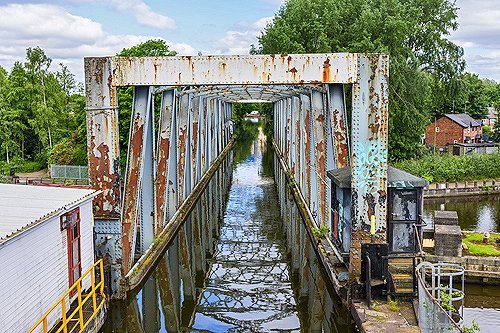
The Barton Swing Aqueduct which takes the Bridgewater Canal
over the Manchester Ship Canal.

Bridgewater Mill reflected in the Bridgewater Canal at Eccles.
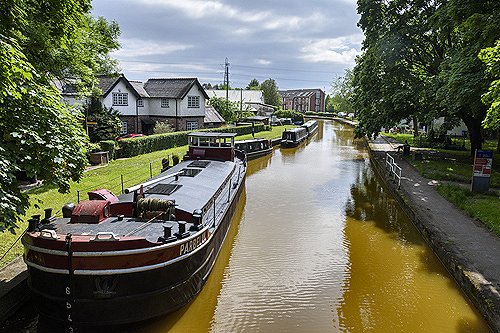
A commercial boat and several canal narrowboats
on the Bridgewater Canal at Worsley.
The orange rust colour of the water is caused by iron ore which still
leaches out of the mines at Worsley Delph and into the canal.
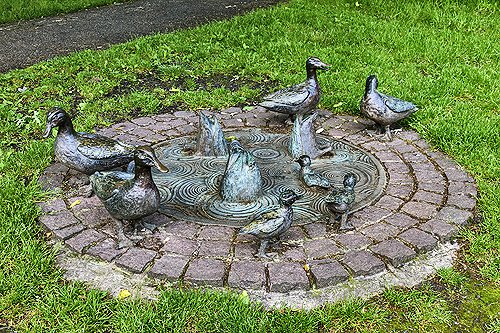
Bronze Duck Pond, a sculpture by Bronzecast.
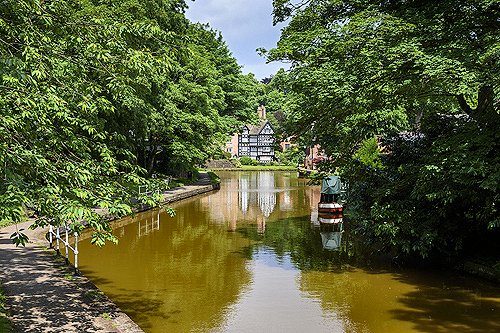
A glimpse of the Worsley Packet House.
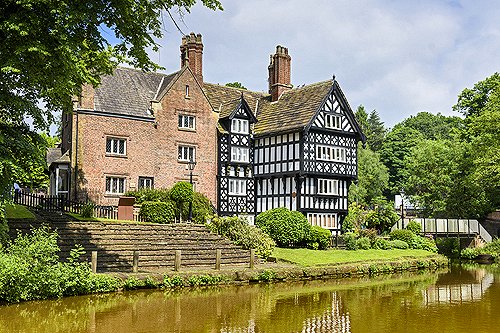
The Worsley Packet House.
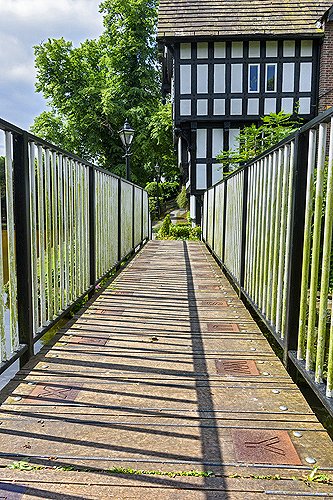
The Alphabet Bridge. The bridge was used by pupils on their way to
St Mark's School and they are said to have used the 26 planks on
the bridge to help them recite the letters of the alphabet.
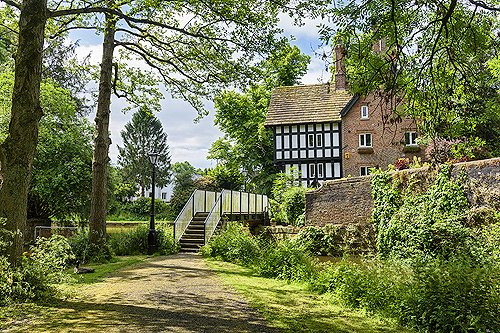
The Alphabet Bridge and the Worsley Packet House.
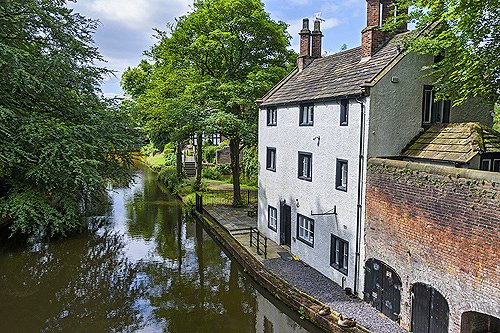
The Nailmaker's Shop by the Bridgewater Canal at Worsley Delph.
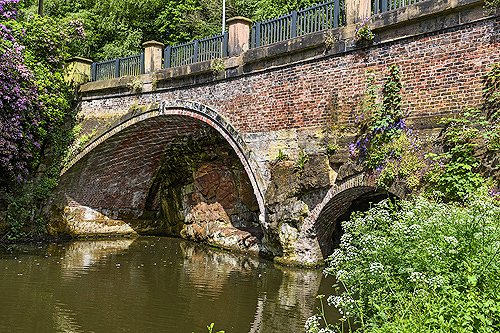
Worsley Road Bridge at Worsley Delph.
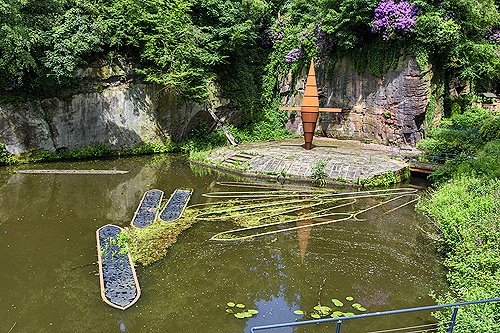
Artworks by Bronzecast, depicting a former crane and the
coal boats known as 'starvationers'.
The crane is a contemporary reimagining of something that was once described by Arthur
Young back in 1770 as 'a crane of curious construction, used for heaving the stones out of
the quarry into the barges', but it's not known exactly how it worked.
The Worsley Navigable Levels are an extensive series of coal mines which were worked largely by the use of underground
canals (the navigable levels) and boats called starvationers. The levels were used for coal transport until 1887, by which
time the total length of navigable levels was 46 miles (74 km). The navigable levels continued to be used for drainage
with regular inspections by boat until final closure in 1968.
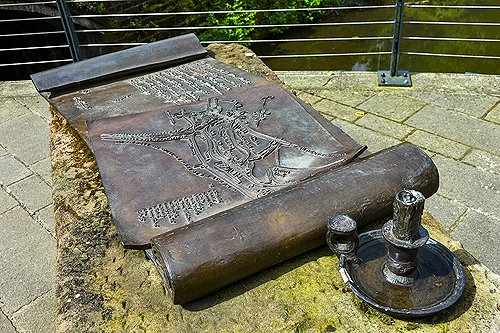
Sculpture depicting the 1659 Act of Parliament allowing the
building of the Bridgewater Canal.
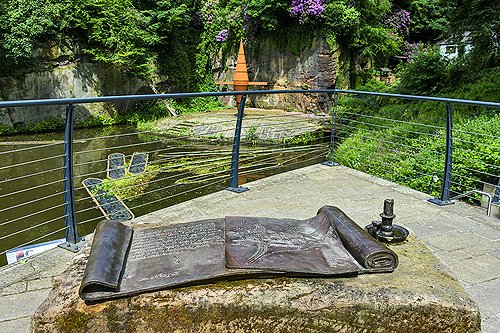
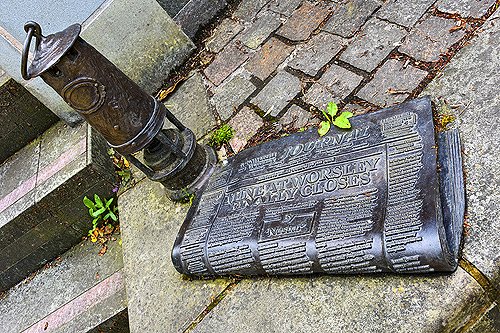
Sculpture depicting a miner's lamp and a newspaper front page.
The main headline announcing the mine's closure is fictional but the
rest of the page, including the advertisements, are all as they would
have been in the Farnworth and Worsley Journal on 18 July 1968.
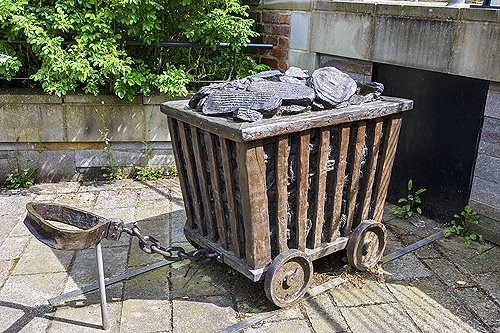
Sculpture depicting a coal cart with harness, usually
pulled by women known as 'drawers'.
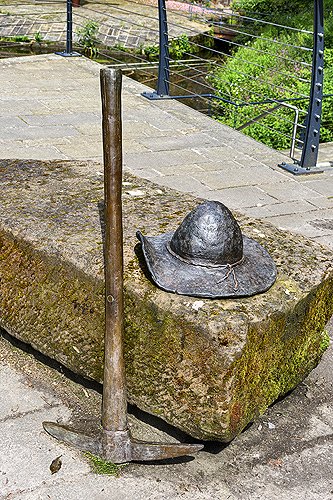
Sculpture depicting a miner's hat and shovel.
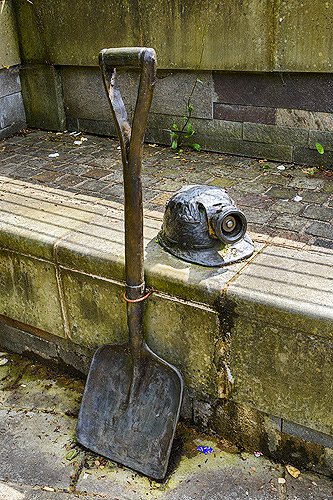
Sculpture depicting a miner's hat and pick axe.
All the artworks are by Bronzecast.

· Home Page · Index · What's New ·